
Effective spider control Carbon County Utah requires identifying common fall invaders like black widows while implementing preventative measures such as clearing egg sacs and webs. Residents can further protect their homes by sealing entry points, reducing outdoor lighting, and maintaining clean indoor spaces to eliminate potential habitats for arachnids during the colder months.
As temperatures drop across Price and the surrounding high desert, Carbon County homeowners often notice an unwelcome increase in eight-legged activity. Finding a web in the corner of your living room or spotting a fast-moving shape in the basement can be unsettling, especially as spiders seek warmth during the transition into fall. Understanding the behavior of these pests is the first step toward reclaiming your peace of mind. In this guide, we will provide the expertise you need to identify local species like the hobo spider and the black widow. You will learn specific prevention techniques designed for our unique Utah climate, where these arachnids prefer to hide, and exactly when professional spider control is necessary to ensure your home remains safe and comfortable for your family throughout the season.
Why Fall is Peak Spider Season in Carbon County Utah

As the morning air turns crisp in Price and Helper, local residents often notice a sudden increase in spider activity. Contrary to popular belief, these arachnids are not necessarily fleeing the cold to find warmth like mice or rats. Instead, the surge in visibility during September and October is primarily biological. Most spiders hatched in the spring have now reached full maturity. In our high-desert climate, the cooling temperatures signal a seasonal shift, prompting males to leave their webs and travel significant distances in search of mates.
This increased movement makes them far more noticeable inside homes and businesses across Wellington and the surrounding areas. While many of these wandering spiders are harmless species that provide a service by eating smaller pests like flies and gnats, their presence can still be unsettling. It is important to distinguish between a beneficial jumping spider and a medically significant species like the black widow. For those dealing with dangerous spiders or overwhelming numbers, seeking reliable residential and commercial pest control is the most effective way to manage these populations. Understanding this behavior is the first step toward effective spider control Carbon County Utah homeowners can use to maintain a safe, pest-free environment throughout the autumn months.
Identifying Common Utah Spiders Without the Panic
Distinguishing between a harmless visitor and a potential threat is the first step in managing your home. According to the Utah State University Extension, which tracks the top 20 arachnids in the state, the most common house spider in Utah is the Common House Spider (Parasteatoda tepidariorum). These small, tan or grey spiders are famous for building tangled webs in corners and ceiling joints. While they are a nuisance, they are not dangerous to humans.
Beyond the common house spider, residents in Carbon County frequently encounter three other distinct types during the fall:
Spider Type | Physical Traits | Behavior |
|---|---|---|
Wolf Spiders | Large, hairy, often grey or brown with stripes. | They do not spin webs to catch prey; they hunt on foot across floors and baseboards. |
Jumping Spiders | Compact, fuzzy, with two very large central eyes. | They move in short, erratic bursts and are active during the day, often near windows. |
Cellar Spiders | Extremely long, thin legs with small, pale bodies. | They prefer damp, dark areas like basements and will vibrate their webs rapidly if disturbed. |
Wolf spiders often cause the most alarm due to their size and speed. However, they are simply looking for insects and generally avoid human contact. Similarly, jumping spiders are highly effective predators that use their excellent vision to track down flies and gnats. None of these species possess venom that is medically significant to humans. Even the cellar spider, often incorrectly rumored to be highly venomous, is completely harmless to people and pets.
Identifying these arachnids helps reduce the immediate stress of a sighting. If you find that the sheer volume of these spiders has become overwhelming, you can contact Keith Pest Control to discuss targeted management. While these species are harmless, an abundance of them usually indicates a secondary insect problem that provides their food source. Proper spider control Carbon County Utah residents rely on starts with understanding that these specific spiders are more of a housekeeping annoyance than a safety risk.
The Hobo Spider vs. The Grass Spider: Setting the Record Straight
While the previous list covers many common sightings, the hobo spider (Eratigena agrestis) often generates the most concern among Price and Helper residents. Many people ask, "Are hobo spiders common in Utah?" The answer is yes; they are frequent visitors in our area, particularly during the late summer and fall. However, they are often confused with the harmless grass spider, another funnel weaver that looks remarkably similar at a glance.
Telling these two apart requires a closer look at their legs. Hobo spiders have solid, uniform light brown legs without any markings. In contrast, grass spiders feature distinct dark rings or bands around their legs. Additionally, grass spiders have much longer spinnerets, which are the two small protrusions at the end of the abdomen, than hobo spiders do. Both spiders build funnel-shaped webs, but grass spiders are more likely to be found in the lawn or shrubbery, while hobo spiders often wander into basement levels.
A common concern we hear is, "Can a hobo spider bite kill you?" Despite the local myths regarding necrotic venom, there is no scientific evidence to support the claim that hobo spiders are deadly or even particularly dangerous to humans. Most modern research suggests their bites result in minor redness or swelling and are not medically significant. Even though they aren't the monsters they are often made out to be, hobo spiders are still undesirable indoors. They create large, messy webs in low-traffic areas like storage rooms or behind furniture.
If you are tired of clearing away these webs or find the population growing, you can contact Keith Pest Control for assistance. Managing these invaders is a standard part of effective spider control Carbon County Utah property owners use to keep their interiors clean and maintain peace of mind during peak spider season.
The One to Take Seriously: The Black Widow

While most local spiders are nothing more than a nuisance, the Western black widow (Latrodectus hesperus) is the one species that demands your full attention. Identifying a female black widow is straightforward if you know what to look for. They possess a distinct, glossy black body with a high-shine finish that looks almost like polished obsidian. Their abdomen is notably bulbous and rounded, featuring the iconic bright red hourglass marking on the underside. In some cases, this marking may appear as two separate spots or a slightly orange tint, but the contrast against the jet-black body remains unmistakable.
Local residents often ask, "How rare are black widows in Utah?" In Carbon County, they are not rare at all. Our high-desert environment provides the perfect habitat for them to thrive. While you may not see them as frequently as jumping spiders, this is due to their reclusive nature rather than a low population. They are a permanent fixture of the landscape in Price and Helper, frequently establishing themselves in areas that remain dark and undisturbed for long periods.
Understanding their behavior is key to avoiding accidental bites. Black widows are shy and non-aggressive by nature. They do not hunt humans or pets; instead, they spend almost their entire lives hanging upside down in their webs waiting for prey. Bites almost always occur as a defensive reaction when a web is disturbed by a stray hand or foot. Because their silk is significantly stronger and stickier than that of a common house spider, you can often hear a distinct "crackle" when their web is torn.
Due to the neurotoxic nature of their venom, black widows represent a legitimate medical risk, particularly to small children, the elderly, and household pets. This risk is the primary reason homeowners seek professional spider control Carbon County Utah residents can trust. Managing these spiders requires more than just a vacuum; it involves targeted treatments to eliminate the spiders and their egg sacs from areas where accidental contact is likely. If you have spotted these glossy black invaders near your home, you should contact Keith Pest Control to ensure your property is thoroughly inspected and treated.
Where Black Widows Hide in Carbon County Properties
Because they prefer to remain undisturbed, Western black widows gravitate toward specific structural features common in Price, Helper, and Wellington. In many older homes throughout Price, deep concrete window wells and unused coal cellars provide the perfect damp, dark environment for these spiders to thrive. These areas are rarely disturbed by foot traffic, allowing a female widow to establish a permanent web and deposit egg sacs without interruption.
Beyond these unique local features, common hiding spots include: - Stacked firewood or scrap lumber kept close to the foundation. - Cluttered corners of garages and sheds where cardboard boxes are stored. - Low-clearance crawl spaces and unfinished basements. - The underside of porch stairs and patio furniture.
When clients ask what attracts black widow spiders to your house, the answer is a combination of habitat and food. They seek out sheltered voids that offer protection from the high-desert wind and sun, but they also require a steady supply of prey. Areas with high insect activity, such as near outdoor trash cans or under bright porch lights that attract beetles and moths, serve as a buffet for black widows. Effectively managing these hiding spots is a critical component of spider control Carbon County Utah residents use to stay safe. If you suspect an infestation in these hard to reach areas, you should contact Keith Pest Control to ensure your property receives reliable residential and commercial pest control tailored to our local environment.
Fall Spider Prevention Tips for Price and Surrounding Areas
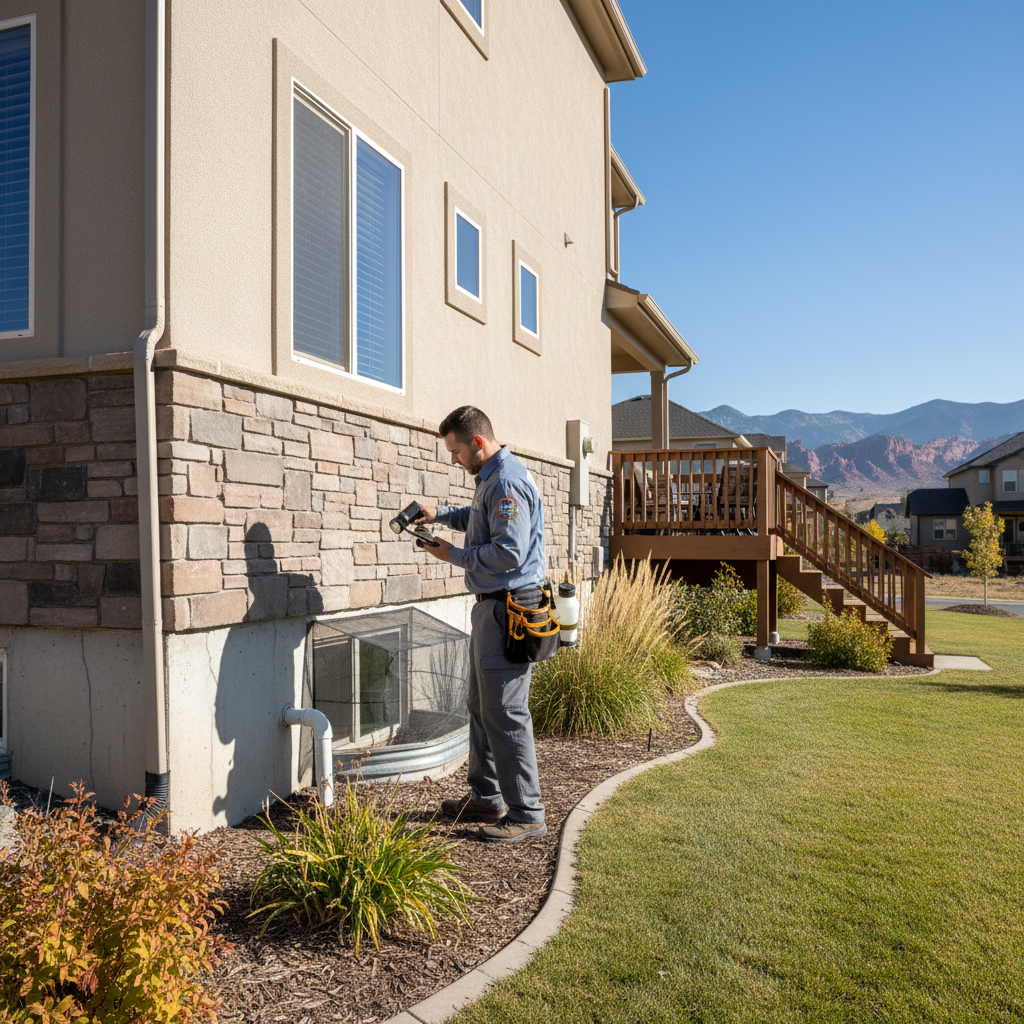
Reducing the number of spiders on your property requires a proactive approach that targets both their physical access and their food sources. Before the first frost hits Price and Helper, take time to declutter garages, sheds, and mudrooms. Spiders thrive in the undisturbed voids created by stacked cardboard boxes and seasonal equipment. Transitioning to plastic storage bins with tight-sealing lids can eliminate many of these hiding spots, making your storage areas less attractive to black widows and hobo spiders.
Outdoor maintenance is equally critical for effective spider control Carbon County Utah homeowners can perform themselves. Firewood should always be stored at least 20 feet away from the home’s foundation and elevated off the ground if possible. Moving these piles away from the exterior walls removes a direct bridge that spiders use to enter through weep holes or siding gaps. Additionally, inspect your home for entry points. Replace torn window screens and install sturdy door sweeps on all exterior doors, including the door leading from the garage into the house.
Managing the insect population around your home is one of the most effective ways to discourage spiders from staying. Spiders build webs where they are guaranteed a meal. By switching exterior white lights to yellow "bug bulbs," you can significantly reduce the number of moths and beetles drawn to your home at night. Fewer insects mean less food for spiders, which naturally keeps their numbers down. Finally, use a broom or a specialized web brush to clear away existing webs and silken egg sacs from eaves, shutters, and window wells. Removing these sacs now prevents hundreds of spiderlings from emerging on your property next spring. If you find that the population is still unmanageable after these steps, you should contact Keith Pest Control to discuss a more comprehensive treatment plan.
When to Call for Professional Spider Control in Carbon County Utah
Spotting a lone wolf spider scuttling across the kitchen floor might only require a vacuum or a quick catch-and-release. However, seeing multiple spiders daily, finding numerous silken egg sacs in garage corners, or discovering a cluster of black widow webs in a dark crawl space indicates a systemic problem. When these sightings become frequent, it usually means a established population is breeding on the property or a significant insect food source is drawing them inside.
Handling black widows in tight, low-visibility areas is particularly hazardous for homeowners. These spiders often tuck their messy webs into floor joists, behind storage bins, or inside deep window wells where a hand can easily make accidental contact. Professional spider control Carbon County Utah residents trust ensures these dangerous arachnids are removed safely. Keith Pest Control uses practical management solutions tailored specifically for the Price and Helper environment, focusing on effective results without unnecessary risk to your family or pets.
Establishing a preventative barrier treatment in the fall is the most effective way to ensure peace of mind through the winter. By treating the exterior perimeter and common entry points before the first heavy frost, you stop the migration of both spiders and the insects they hunt. If you are concerned about a growing population or have identified venomous species on your property, you should contact Keith Pest Control to discuss reliable residential and commercial pest control options that protect your home throughout the changing seasons.
Dealing with fall spiders in Carbon County requires a mix of awareness and proactive maintenance. By sealing gaps around your windows and keeping storage areas tidy, you can significantly reduce the chances of these eight-legged visitors moving in for the season. While DIY methods often help, managing a persistent infestation can be a daunting task. If you would prefer to have expert help with your pest management, you can read more about our local expertise and our commitment to keeping Carbon County homes comfortable. We are here whenever you need a professional hand.